Telephoto lenses open up a different way of working with a camera. Instead of relying on physical proximity to a subject, photographers can use a longer focal length to frame distant objects, isolate details, and create tighter compositions from a more comfortable shooting position.
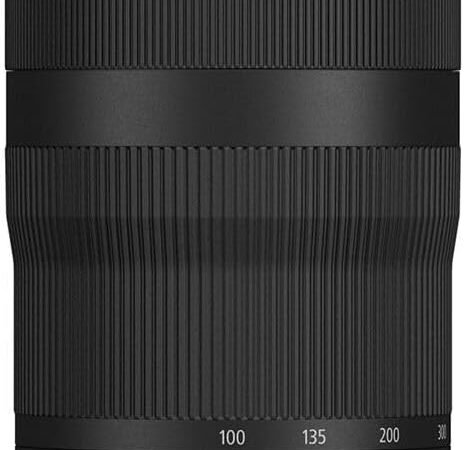
The Canon RF100-400mm F5.6-8 IS USM is a telephoto zoom designed for Canon EOS R-series mirrorless cameras. Its 100–400mm focal-length range covers a broad section of the telephoto category, while optical image stabilization, Nano USM autofocus, and a relatively compact design make it suitable for photographers who want substantial reach without moving into the size and weight associated with some larger professional telephoto lenses.
Canon lists the lens at approximately 635 grams, with a maximum diameter of about 79.5mm and a length of approximately 164.7mm. It uses the RF mount and accepts 67mm filters.
The lens also has a variable maximum aperture of f/5.6–8. At 100mm, the maximum aperture is f/5.6, while at the 400mm end it becomes f/8. This is an important characteristic to understand because it affects how the lens behaves in different lighting conditions.
Canon also specifies optical image stabilization of up to 5.5 stops under its stated testing conditions, increasing to up to 6 stops of Coordinated IS when used with compatible EOS R cameras featuring in-body image stabilization.
With a minimum focusing distance of approximately 1.2 meters at 100mm, 0.88 meters at 200mm, and 1.05 meters at 400mm, the lens can also focus relatively close for a telephoto zoom. Its maximum magnification reaches approximately 0.41x at 400mm.
These characteristics make the lens relevant to wildlife photography, outdoor sports, travel, nature, birds, distant details, portraits, and general telephoto work.
This article explains the Canon RF100-400mm F5.6-8 IS USM in detail, including its optical design, stabilization, autofocus system, focal-length range, close-focusing capability, practical applications, compatibility, limitations, and how it compares conceptually with other telephoto lens categories.
Introduction to the Canon RF100-400mm F5.6-8 IS USM
The Canon RF100-400mm F5.6-8 IS USM is built around a straightforward idea: provide a substantial telephoto zoom range in a relatively manageable package.
At 100mm, the lens provides a moderately long telephoto perspective. As the zoom moves toward 200mm, 300mm, and eventually 400mm, distant subjects occupy progressively more of the frame.
This makes a zoom telephoto particularly useful when the distance between photographer and subject cannot easily be changed.
Wildlife is a clear example. An animal may remain far away because of its behavior, the environment, or the need to maintain an appropriate distance. A 400mm focal length can provide substantially tighter framing than a conventional standard zoom.
The same principle applies to sports, where photographers may be positioned behind a boundary or at a fixed location.
Travel photographers can also benefit from the ability to photograph architectural details, distant landscapes, or subjects across a street without carrying multiple long focal-length lenses.
One of the defining characteristics of this Canon lens is that it does not use a constant maximum aperture. Instead, the maximum aperture changes from f/5.6 at the wide end to f/8 at 400mm.
That design helps keep the lens relatively compact compared with many telephoto zooms that maintain much wider apertures throughout their range.
Key Features
100–400mm Telephoto Zoom Range
The 100–400mm range is the foundation of the lens.
At 100mm, photographers can frame subjects relatively broadly for a telephoto lens. This can be useful for larger animals, environmental portraits, sports scenes, and landscapes containing distant details.
At 200mm, the lens provides a tighter perspective suitable for individual subjects and more isolated compositions.
At 300mm and 400mm, the increased magnification becomes particularly useful when the subject is farther away.
A major advantage of a zoom is the ability to adjust framing without physically moving toward or away from the subject.
For wildlife, this can be especially practical because the subject’s distance may change continuously.
Variable f/5.6–8 Aperture
The maximum aperture ranges from f/5.6 to f/8. Canon specifies f/5.6 at 100mm and f/8 at 400mm.
This is one of the most important specifications to understand.
A wider aperture allows more light to reach the sensor. As the lens is zoomed toward 400mm, the maximum aperture becomes smaller.
In bright outdoor conditions, this may be relatively straightforward to work with. In low-light situations, however, photographers may need to compensate with ISO, shutter speed, or other exposure settings.
The aperture also affects depth of field and background separation.
At 400mm, even f/8 can produce a relatively isolated subject when the photographer is sufficiently distant from the background and the subject is appropriately positioned.
Optical Image Stabilization
The RF100-400mm F5.6-8 IS USM includes Canon’s optical Image Stabilizer.
Canon specifies up to 5.5 stops of optical IS correction at 400mm under CIPA testing conditions when used with an EOS R camera. With compatible EOS R cameras featuring in-body image stabilization, Canon specifies up to 6 stops of Coordinated IS.
Stabilization can be particularly useful with telephoto lenses because camera movement becomes more noticeable as focal length increases.
A small amount of hand movement that might be difficult to notice at a wide focal length can become much more apparent at 400mm.
Image stabilization is designed to compensate for camera movement. It does not freeze the movement of an animal, athlete, bird, or other subject.
For moving subjects, shutter speed remains an important part of the overall exposure strategy.
Nano USM Autofocus
The lens uses Canon’s Nano USM focusing system.
Canon describes it as providing high-speed, smooth, and quiet autofocus. The system also uses a rear-focusing design.
Fast autofocus can be particularly relevant to wildlife and sports because subjects may change position quickly.
Quiet focusing can also be useful for video.
The exact autofocus behavior depends on the EOS R camera body, autofocus mode, subject characteristics, available light, and other camera settings.
12-Element, 9-Group Optical Construction
Canon specifies a construction of 12 elements in 9 groups. The optical system includes one Ultra Low Dispersion glass element and one aspherical element.
The UD element is intended to help control chromatic aberration, which can appear as color fringing around high-contrast edges.
The aspherical element contributes to optical correction and helps manage certain aberrations.
Canon also uses Super Spectra Coating on the lens.
Lens coatings can help reduce unwanted reflections, flare, and ghosting, particularly when bright light sources are present.
Nine-Blade Circular Aperture
The lens uses a nine-blade circular aperture.
A circular aperture can contribute to the appearance of out-of-focus highlights and background blur.
At longer focal lengths, photographers can create substantial subject separation even without extremely wide apertures, particularly when the subject is positioned well away from the background.
The appearance of bokeh depends on focal length, aperture, subject distance, background distance, and the specific scene.
Close-Focusing Capability
Although it is primarily a telephoto lens, the RF100-400mm also provides useful close-focusing capability.
Canon lists minimum focusing distances of:
- 1.2 meters at 100mm
- 0.88 meters at 200mm
- 1.05 meters at 400mm
The maximum magnification reaches approximately 0.41x at 400mm.
This can be useful for photographing flowers, insects, small animals, details, and other subjects that benefit from a tighter frame.
It does not make the lens a dedicated macro lens, but the relatively high magnification for a telephoto zoom adds flexibility.
RF-Mount Compatibility
The lens uses Canon’s RF mount and is intended for EOS R-series mirrorless cameras.
This means compatibility should be checked against the exact camera body.
RF lenses are designed specifically for the RF mount rather than Canon’s older EF mount.
Programmable Control Ring
Canon includes a customizable control ring on the lens.
The ring can be assigned to camera functions such as aperture, shutter speed, ISO, or exposure compensation through compatible camera settings.
This provides another physical control on the lens barrel.
The control ring uses click stops by default. Canon notes that its clicking mechanism can be removed through a Canon service center for users who need quieter operation during video recording.
Relatively Manageable Telephoto Design
The lens weighs approximately 635 grams, or around 1.4 pounds. Canon lists its dimensions at approximately 164.7mm long and 79.5mm in maximum diameter.
Telephoto lenses can become physically large as focal length and aperture increase.
The design of the RF100-400mm focuses on providing 400mm reach without the physical dimensions associated with some larger professional telephoto zooms.
That can be relevant for photographers who carry their equipment over long distances.
How the Canon RF100-400mm F5.6-8 IS USM Can Be Used
Wildlife Photography
Wildlife is one of the most obvious applications for a 100–400mm zoom.
Animals are often difficult to approach closely, and maintaining an appropriate distance is important for both the photographer and the subject.
The 400mm end can provide tighter framing from farther away.
The zoom range also provides flexibility. If an animal approaches closer, the photographer can move toward 100mm rather than having to change lenses.
Autofocus and image stabilization add useful capabilities for handheld outdoor shooting, although successful wildlife photography still depends on light, subject behavior, camera technique, and the capabilities of the camera body.
Bird Photography
Bird photography often requires substantial focal length because birds can be small and difficult to approach.
The 400mm end provides considerably more reach than standard lenses.
The relatively close focusing capability can also help when a bird is nearby, although the appropriate distance should always be maintained to avoid disturbing wildlife.
Bird photography often involves fast subject movement, so stabilization alone is not enough to guarantee sharp images. Autofocus performance and shutter speed also play important roles.
Sports Photography
Outdoor sports can involve subjects moving rapidly across a large field or court.
A telephoto zoom allows photographers to frame players and moments from positions where they cannot physically move closer.
The 100–400mm range can provide flexibility between wider scenes and tighter subject framing.
The lens’s Nano USM autofocus system is designed for fast and smooth focusing, while the optical stabilization system can help reduce camera movement.
Actual performance depends heavily on the camera body’s autofocus system and the available lighting.
Nature Photography
Nature photography encompasses more than wildlife.
A telephoto lens can be used to isolate:
- Flowers
- Leaves
- Distant trees
- Mountain details
- Rocks
- Water features
- Birds
- Insects
- Small environmental details
The longer focal lengths can compress the apparent relationship between foreground and background, creating a different visual effect from wide-angle photography.
Travel Photography
A 100–400mm lens can be useful during travel when photographing distant architecture, mountains, wildlife, details, and scenes across large open spaces.
For example, a photographer standing at a viewpoint can use the longer end to isolate a distant building or mountain feature.
The lens’s relatively manageable weight can also be useful when traveling with several pieces of equipment. Canon specifically positions the lens as a travel-friendly telephoto option.
However, a 100–400mm lens is a specialized addition to a travel kit rather than a replacement for a standard or wide-angle lens.
Outdoor Portraits
Telephoto lenses can be used for portraits when photographers want tighter framing and greater working distance.
At 200–400mm, the photographer can remain farther from the subject while producing a tightly framed composition.
Longer focal lengths can also produce a compressed perspective compared with wider lenses.
The f/8 maximum aperture at 400mm means this lens does not offer the same low-light capability as a 400mm lens with a much wider maximum aperture.
Nevertheless, in daylight or other sufficiently bright conditions, it can be useful for outdoor portraits.
Landscape Details
Landscape photography does not always require a wide lens.
Telephoto lenses can isolate distant parts of a landscape, such as:
- Mountain peaks
- Trees
- Buildings
- Rock formations
- Layers of hills
- Boats
- Architectural details
The 100–400mm range allows photographers to move from moderately tight environmental scenes to highly isolated details.
This can add visual variety to a landscape photography kit.
Who This Lens May Be Suitable For
Wildlife Photographers
The combination of 400mm reach, zoom flexibility, stabilization, and autofocus makes the lens relevant to photographers working with animals in outdoor environments.
Birdwatching Photographers
Photographers who document birds may benefit from the long focal length while retaining the ability to zoom out when the subject moves closer.
Sports Photographers
The lens can be useful for outdoor sports where the photographer must work from a fixed position or maintain distance from the action.
Travel Photographers
Travelers interested in wildlife, distant landscapes, and architectural details may appreciate having a telephoto zoom available without carrying a much larger professional lens.
Nature Enthusiasts
The close-focusing capability adds flexibility for flowers, plants, insects, and smaller subjects.
EOS R-Series Users
The lens is specifically designed for Canon’s RF mount and EOS R-series cameras, making system compatibility an essential consideration.
Important Things to Consider
The Aperture Becomes f/8 at 400mm
One of the most important limitations to understand is the maximum aperture.
At 400mm, the lens reaches f/8.
That means it does not gather as much light as a telephoto lens with a larger maximum aperture.
In bright daylight, this may be relatively easy to accommodate.
In low-light conditions, photographers may need to increase ISO or use slower shutter speeds when subject movement allows.
This characteristic is closely related to the lens’s relatively compact design.
Telephoto Photography Amplifies Camera Movement
At 400mm, small movements of the camera can have a visible effect on framing and sharpness.
The built-in optical stabilization is therefore an important feature.
Canon specifies up to 5.5 stops of optical stabilization and up to 6 stops of Coordinated IS with compatible IBIS-equipped EOS R cameras under its testing conditions.
Actual results will vary.
Stabilization Does Not Freeze Moving Subjects
This distinction is particularly important for wildlife and sports.
If a bird moves quickly or an athlete runs across the frame, image stabilization cannot eliminate the blur caused by that subject movement.
Photographers must still use appropriate exposure settings for the situation.
It Is Not a Professional Super-Telephoto
A 400mm focal length provides significant reach, but photographers working with very distant wildlife or specialized sports applications may require even longer focal lengths.
The RF100-400mm can also accept Canon’s RF1.4x and RF2x extenders, which expand the theoretical reach, but the resulting maximum apertures become smaller. Canon specifies 140–560mm at f/8–11 with the RF1.4x and 200–800mm at f/11–16 with the RF2x.
These combinations therefore involve additional considerations regarding light and autofocus.
No Dust- or Weather-Resistant Construction Listed
Canon’s current technical specifications list no dust/weather-resistant construction for this lens.
This is worth considering for photographers who frequently work in rain, dusty environments, beaches, or other challenging outdoor conditions.
Users should take appropriate precautions and avoid assuming that a telephoto lens is weather-sealed simply because it is designed for outdoor photography.
Filter Size
The lens uses a 67mm filter diameter.
This is relevant for photographers who plan to use circular polarizers, neutral-density filters, or protective filters.
No Distance Scale
Canon specifies that the lens does not have a physical distance scale. Compatible EOS R cameras can display distance information through the electronic viewfinder or LCD.
For most autofocus photography this may not be a major concern, but photographers who rely heavily on traditional distance markings should be aware of the design.
Comparing General Telephoto Lens Categories
100–400mm Zoom vs. 70–300mm Zoom
A 70–300mm lens generally provides a shorter telephoto range.
The 100–400mm category reaches farther and can be more suitable for distant wildlife, birds, and sports.
The 70–300mm category may be more convenient for photographers who need a broader transition between standard and telephoto perspectives.
Neither category is universally appropriate; the useful choice depends on the photographer’s subjects and working distance.
100–400mm Zoom vs. 100–500mm Zoom
Both categories provide substantial telephoto reach.
A 100–500mm lens extends farther and can provide additional framing flexibility at the long end.
A 100–400mm lens can be smaller or lighter depending on its design and maximum aperture.
Photographers should consider the importance of the additional reach against the physical size and other system requirements.
100–400mm Zoom vs. Prime Telephoto
A prime telephoto uses one focal length.
A prime may be designed around a wider aperture or specialized optical performance, depending on the model.
The 100–400mm zoom instead provides framing flexibility.
For wildlife or sports where subject distance changes quickly, that ability to change focal length can be particularly useful.
100–400mm Zoom vs. Super-Telephoto
Super-telephoto lenses extend substantially beyond 400mm.
They are designed for situations where the subject remains very far away.
Examples include specialized wildlife, bird, and field-sports applications.
The RF100-400mm occupies a more moderate position within the telephoto category and can be easier to carry for photographers who do not require extreme reach at all times.
Understanding the 100mm to 400mm Range
The difference between 100mm and 400mm is substantial.
At 100mm, photographers can include more of the surrounding environment.
This can be useful for:
- Larger animals
- Environmental portraits
- Sports scenes
- Landscape details
- Nearby subjects
At 200mm, framing becomes tighter.
At 300mm, distant subjects can occupy more of the frame.
At 400mm, the lens provides its greatest magnification and narrowest field of view.
This range is one reason a telephoto zoom can be more adaptable than a single long focal-length prime.
The photographer can adjust composition without changing lenses.
Close-Up Photography With the RF100-400mm
The lens’s close-focusing performance is an interesting secondary feature.
Canon specifies a minimum focusing distance of 0.88 meters at 200mm and a maximum magnification of approximately 0.41x at 400mm.
This allows relatively small subjects to occupy a significant portion of the frame.
Flowers are an obvious example.
A photographer can use the 400mm end to isolate a flower against a distant background, potentially producing substantial subject separation.
The same approach can be used for leaves, insects, textures, small objects, and other details.
It is still important to distinguish this from true macro photography. A dedicated macro lens is generally designed around much higher magnification and specialized close-working distances.
Telephoto Compression and Background Separation
Long focal lengths can change the visual relationship between subjects and backgrounds.
When a photographer uses a longer focal length from a greater distance, distant background elements can appear visually closer to the subject.
This is sometimes described as telephoto compression.
It can be useful for landscapes, portraits, wildlife, and sports.
Background separation is also influenced by subject distance, background distance, focal length, aperture, and sensor format.
The RF100-400mm’s 400mm end can therefore create a different visual character from a standard zoom even though its maximum aperture is relatively modest.
Autofocus and Video Considerations
Nano USM is designed to provide fast and quiet autofocus.
This makes the lens relevant to video creators who need smooth focus transitions without excessive mechanical noise.
Canon specifically notes that Nano USM is advantageous for video because of its quiet operation and smooth focus changes.
The programmable control ring is another useful feature for video and still photography.
However, the clicking sound of the control ring may be recorded by microphones during video. Canon states that the click mechanism can be removed through a Canon service center for a fee.
Video creators should therefore consider how they plan to operate the lens during recording.
Using Canon RF Extenders
An unusual characteristic of this lens is compatibility with Canon’s RF1.4x and RF2x extenders.
Canon specifies the following combinations:
- RF1.4x: 140–560mm, f/8–11
- RF2x: 200–800mm, f/11–16
Canon also specifies autofocus and image stabilization compatibility with EOS R-series cameras under its listed compatibility conditions.
The extenders can therefore increase the lens’s reach, but they also reduce the amount of light reaching the sensor.
This is an important trade-off.
At the 2x combination, for example, the maximum aperture reaches f/16 at the longest focal length.
Such a setup may be more dependent on strong lighting and camera ISO performance.
Maintenance and Care
Telephoto lenses are often used outdoors, where they can encounter dust, moisture, sand, fingerprints, and other contaminants.
Basic maintenance should include keeping the front and rear caps attached whenever the lens is not being used and cleaning the optical surfaces only with appropriate photographic cleaning materials.
The lens’s front element should not be cleaned with household glass cleaners or other unsuitable products.
Because Canon does not list dust- and weather-resistant construction for this model, photographers should take additional care in wet or dusty environments.
When moving between significantly different temperatures, allowing the equipment to acclimate gradually can also help reduce condensation.
Frequently Asked Questions
What cameras is the Canon RF100-400mm F5.6-8 IS USM compatible with?
It is an RF-mount lens designed for Canon EOS R-series mirrorless cameras.
Users should verify compatibility with their exact camera body and firmware.
What is the focal-length range?
The lens covers 100mm to 400mm.
What is the maximum aperture?
The maximum aperture ranges from f/5.6 at 100mm to f/8 at 400mm.
Does the lens have image stabilization?
Yes. Canon specifies optical image stabilization with up to 5.5 stops of correction at 400mm under its stated testing conditions. Compatible EOS R cameras with in-body stabilization can provide up to 6 stops of Coordinated IS.
Does image stabilization freeze moving subjects?
No. Stabilization primarily compensates for camera movement. Subject movement can still cause blur.
Does the lens use autofocus?
Yes. It uses Canon’s Nano USM autofocus system.
Is it suitable for wildlife photography?
The 100–400mm range, autofocus, and stabilization make it relevant to wildlife photography, particularly in situations where a moderate-to-long telephoto zoom is appropriate.
Wildlife photography results also depend on lighting, subject distance, camera autofocus capabilities, and photographer technique.
Can it be used for bird photography?
Yes. The 400mm focal length provides substantial reach for birds and other relatively small distant subjects.
Photographers should maintain an appropriate distance and avoid disturbing wildlife.
Can it be used for sports?
Yes. The telephoto range can be useful for outdoor sports where photographers are positioned away from the action.
The camera body’s autofocus system and available light will also influence performance.
How close can it focus?
Canon lists a minimum focusing distance of 1.2 meters at 100mm, 0.88 meters at 200mm, and 1.05 meters at 400mm.
What is its maximum magnification?
Maximum magnification is approximately 0.41x at 400mm.
Is it a macro lens?
No. It provides useful close-up capability, but it is a telephoto zoom rather than a dedicated macro lens.
Does it have a customizable control ring?
Yes. The control ring can be assigned to various camera functions through compatible EOS R camera settings.
What filter size does it use?
The filter diameter is 67mm.
How much does the lens weigh?
Canon lists the weight at approximately 635 grams, or about 1.4 pounds.
Is it weather sealed?
Canon’s technical specifications list no dust- or weather-resistant construction for this lens.
This is an important consideration for photographers who regularly work in difficult outdoor conditions.
Can the lens use Canon RF extenders?
Yes. Canon specifies compatibility with both the RF1.4x and RF2x extenders.
What focal lengths are available with the extenders?
With the RF1.4x, the effective range becomes 140–560mm with a maximum aperture range of f/8–11.
With the RF2x, the effective range becomes 200–800mm with a maximum aperture range of f/11–16.
Is it suitable for travel?
It can be useful for travel photography involving wildlife, distant landscapes, architecture, and outdoor subjects. Its approximately 635-gram weight is also relevant when considering portability.
Is it suitable for portraits?
Yes. The longer focal lengths can be used for outdoor portraits where a greater working distance and tighter framing are desirable.
Conclusion
The Canon RF100-400mm F5.6-8 IS USM is a telephoto zoom designed around reach, flexibility, and relatively manageable size.
Its 100–400mm focal range allows photographers to move from moderately tight telephoto compositions to significantly more distant framing without changing lenses. That makes the lens relevant to wildlife, birds, outdoor sports, travel, nature, landscape details, and portraits.
Its optical image stabilization can provide up to 5.5 stops of correction under Canon’s stated testing conditions, with up to 6 stops of Coordinated IS available when paired with compatible EOS R cameras featuring in-body image stabilization.
Nano USM autofocus provides another important part of the design, with Canon emphasizing fast, smooth, and quiet focusing. The lens also includes a programmable control ring and a nine-blade circular aperture.
The close-focusing capability is particularly useful for a telephoto zoom, reaching approximately 0.41x magnification at 400mm. This expands the lens’s usefulness beyond distant subjects and allows photographers to explore flowers, insects, small objects, and other details.
At the same time, the variable f/5.6–8 aperture should be considered carefully. The lens is not designed around the wide apertures found on larger professional telephoto lenses, and the maximum aperture becomes f/8 at 400mm. The lack of listed dust- and weather-resistant construction is another consideration for photographers who frequently work in demanding outdoor environments.
Compatibility with Canon’s RF1.4x and RF2x extenders adds another dimension to the system, although the resulting combinations have substantially smaller maximum apertures and therefore require careful consideration of available light.
For EOS R-series photographers looking to understand how a 100–400mm telephoto zoom could fit into their equipment, the most important factors are the desired focal-length range, lighting conditions, camera compatibility, portability requirements, autofocus needs, stabilization, and the subjects they expect to photograph.